Villari Structural & EOT Crane Crack Detection
Villari partner for India · wireless crack detection for EOT cranes and steel structures.
Wireless monitoring of fatigue crack growth in steel structures. Villari combines local sensor probes, LoRaWAN communication and an online dashboard to support inspection and repair decisions for critical assets.
Wireless monitoring of fatigue crack growth in steel structures. Villari combines local sensor probes, LoRaWAN communication and an online dashboard to support inspection and repair decisions for critical assets.
Keep fatigue-critical steelwork in the maintenance picture
A crane or bridge must be assessed as a structure as well as an operating asset. Where fatigue-critical locations need closer attention, measurements between inspections can help engineering teams understand whether local crack growth is changing. Villari combines wireless probes, analytics and an online dashboard to support inspection and repair planning at selected locations.
Where Villari fits in a maintenance programme
Overhead travelling cranes in a steel plant
A steel plant may have critical cranes working around a demanding production schedule. Monitoring selected fatigue-critical joints gives the engineering team condition information between planned inspections. The dashboard can show where a monitored indicator is changing, helping the team focus an investigation and plan the next inspection or repair discussion around operations.
Ship-to-shore cranes at ports and terminals
For cargo-handling structures, maintenance planning has to consider access as well as operating requirements. Local wireless probes provide measurements at the chosen locations without running a cable from each probe to a remote data centre. Review location selection, transmitter coverage, gateway connectivity and the inspection response as one deployment plan.
Existing and ageing steel structures
Where an asset is already in service, the ability to install on painted steel without paint removal can be useful when evaluating a monitoring arrangement. Villari also lists applications on large-span highway bridges. Suitability depends on the structural detail and selected locations, so an application review should precede a deployment decision.
Bringing condition information into an inspection meeting
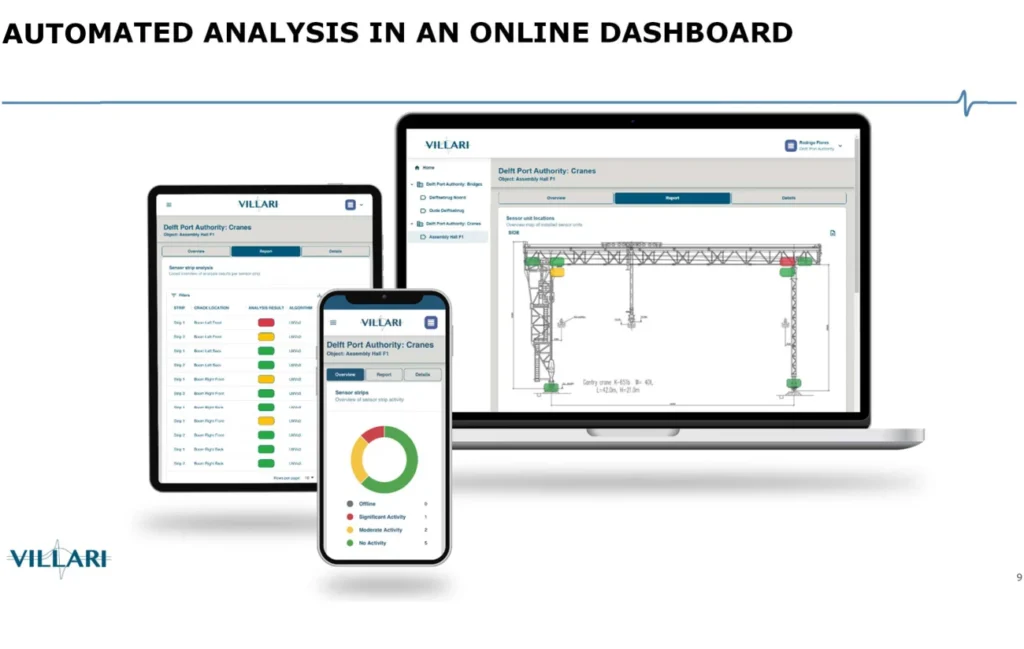
The online dashboard brings sensor locations, historical trends, condition indicators and automated warnings into a shared view. Engineering teams can use it to discuss which monitored points need investigation and how those findings relate to the wider asset inspection programme. A warning initiates review; it is not a declaration that an entire structure is safe or unsafe.
What to review before selecting Villari
Prepare the structural details, existing inspection findings, locations of concern and operating/access constraints for discussion. Villari’s technology has a DNV Statement of Qualified Technology; that qualification is distinct from certification of a particular customer asset. WRT India is the partner for India for application and deployment discussions.
Common application questions
Does Villari monitor every part of a crane automatically?
No. It monitors local fatigue crack growth at selected probe locations. Location selection and the overall structural inspection programme remain important.
Can monitoring replace scheduled structural inspections?
It provides additional information between inspections and supports prioritisation. Inspection and engineering assessment of the asset remain part of the maintenance programme.
What is the value of the wireless arrangement?
Wireless reporting and battery operation can reduce the need for extensive cabling at monitored locations. The complete radio and gateway arrangement still needs to be reviewed for the site.
Key features
- Wireless probes at fatigue-critical locations
- Online dashboard with automated warnings
- Installation on painted steel without paint removal
- WRT India: Partners for India
Keep critical crane operations informed
Steel plants and ports depend on cranes operating within tight production and handling schedules. Monitoring fatigue-critical joints helps maintenance teams track changes between inspections and plan interventions around operating needs.
How the technology works
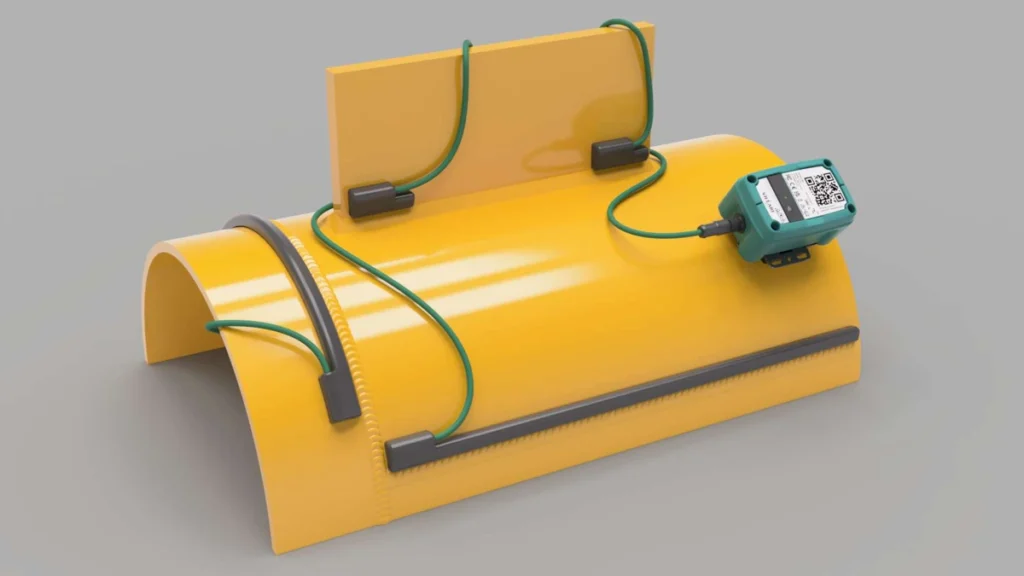
Crack growth changes the local magnetic field in steel. Sensor probes detect these variations; patented analytics interpret the measurements and present the results through an online dashboard. The system monitors selected locations and complements an asset inspection and maintenance programme.
From early warning to planned intervention
Use the dashboard to review sensor locations, colour-coded condition indicators and historical trends. Automated warnings help engineering teams investigate changes, prioritise inspections and schedule repairs. Critical locations can be monitored on existing or ageing structures.
Applications and support in India
Applications include overhead travelling cranes, ship-to-shore cranes and large-span highway bridges. WRT India is Villari’s partner for India and can discuss location selection, deployment and catalogue requirements.
Technical specifications
| Parameter | Specification |
|---|---|
| Technology | Passive magnetic flux leakage and the Villari effect |
| Communication | LoRaWAN |
| Probes per transmitter | Up to 20 |
| Measurements | 6 per day |
| Battery life | Up to 5 years |
| Protection | IP67 |
| Operating range | −40 to +80 °C |
| Qualification | DNV Statement of Qualified Technology |
One view of critical locations.
Review location-based indicators, historical data and automated warnings through Villari’s dashboard. WRT India: partner for India.